
Arizona evenings are genuinely spectacular, and for most of the year, the backyard doesn't become…
What Actually Happens to Your Electrical Panel During an Arizona Power Outage?
Here’s something most homeowners get wrong: the outage itself doesn’t damage your electrical system. The real threat is what happens the moment power comes back on. During a power outage, your electrical panel goes quiet and waits. When the grid restores, it sends a surge of voltage into your home all at once, and anything in its path that isn’t protected pays the price.
Arizona makes this worse than most places. Monsoon storms knock out power and restore it multiple times in a single night. Summer grid failures during peak demand hours create volatile restoration conditions. If your panel is aging and your electronics are unprotected, every one of those events is a roll of the dice. Here’s what’s actually happening inside your electrical system during and after an outage, and what to do about it.
Your Outage Electrical Survival Checklist
- Your panel is mostly safe during an outage: the danger lies in the surge when power is restored.
- Breakers that trip after an outage are protecting you; ones that won’t reset need a professional, not more resets.
- Restoration surges occur quickly and affect every unprotected device in your home simultaneously.
- A whole-home surge protector is the single most effective defense against electrical damage caused by outages.
- Generators without a transfer switch are a legal and lethal hazard — no exceptions.
What Your Electrical Panel Is Actually Doing During an Outage
When the power cuts out, your panel stops receiving current from the utility. That’s it. The panel itself goes idle; as in it’s not being damaged, but it’s also not really doing anything beyond existing.
What can happen at the moment of cutoff is a brief electrical event as the supply is suddenly interrupted. Breakers under heavy load may trip from that jolt. But the panel hardware is built to handle interruptions. The moment that deserves your attention comes later, when the lights flicker back on.
The Moment Power Returns Is When the Damage Happens
When your utility restores power after an outage, it doesn’t ease the voltage back gradually. It comes back at full strength, often with a spike. That surge travels through your service entrance, into your panel, and out to every outlet in every room simultaneously. TVs, computers, routers, refrigerators with digital controls, smart home devices: all of them absorb whatever comes through the line.
Most appliance failures that get blamed on a power outage actually happen in the hours or days after restoration. The outage gets the credit, but the surge did the work.
Arizona’s Outage Cycles Make This Worse
A single monsoon storm can knock power out and restore it three or four times in one evening. Each restoration is a new surge event. According to APS, customers should be prepared for multiple interruptions during severe weather events. Without whole-home surge protection installed at the panel, your home absorbs every one of those hits with zero defense.
Why Breakers Trip After a Power Outage: The Cold Load Pickup
When power is restored, every appliance that was running before the outage tries to restart at the exact same moment. The combined startup current from your AC, refrigerator, water heater, and everything else can easily exceed the circuit’s rating. Electricians call this cold load pickup, and it’s one of the most common causes of post-outage breaker trips.
The U.S. Department of Energy recommends turning off major appliances before power is restored, exactly for this reason. It gives your panel a fighting chance to come back online without getting hammered all at once.
How to Reset a Tripped Breaker the Right Way
Don’t just flip it back and hope. Follow these steps:
- Turn off or unplug major appliances first — reduce the load before you attempt a reset.
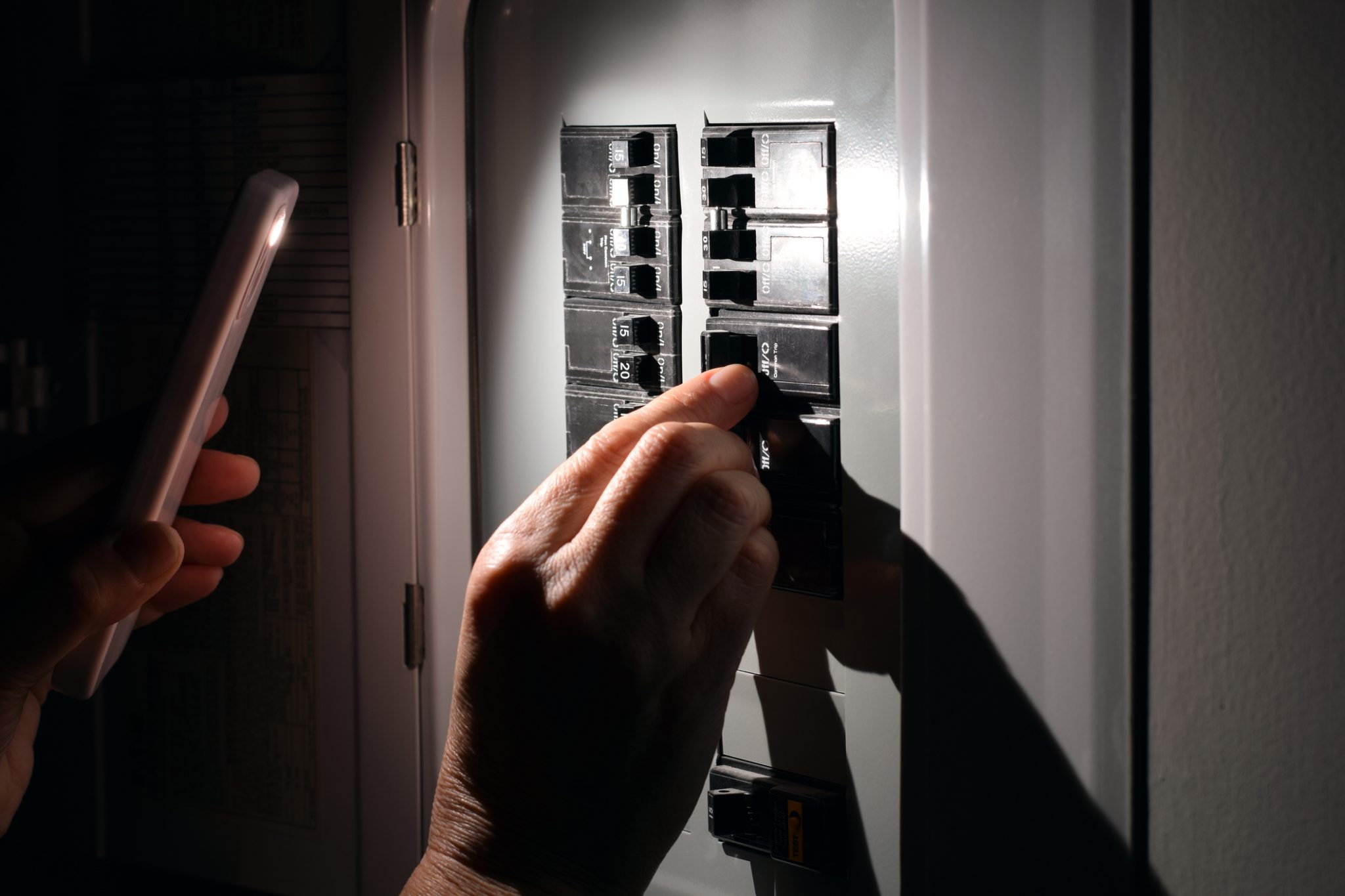
- Find the tripped breaker — it will be in the middle position or fully off.
- Push it firmly to OFF first, then back to ON.
- Restore appliances one at a time, giving the system a moment between each.
If the breaker trips again immediately after reset, stop. Do not keep resetting it. A breaker that won’t hold is telling you there’s a problem on that circuit, so call a licensed electrician. Castle Electric’s electrical inspection services can identify exactly what’s happening before a nuisance trip becomes a serious problem.
Why Won’t My Breaker Reset After a Power Outage?
A breaker that refuses to reset after an outage is one of four things: still overloaded, physically damaged by the surge, dealing with a fault in the connected wiring or device, or simply worn out. Breakers have a finite service life, and repeated surge events accelerate the wear.
A breaker that won’t reset is a diagnostic, not an inconvenience.
It may be pointing to damaged wiring inside the wall, a failing breaker that needs replacement, or an appliance that took a surge hit and is now creating a fault on the circuit. Any of those scenarios requires a licensed electrician, not a YouTube tutorial and a second opinion from your neighbor. If your panel is older or has experienced multiple severe outages, it may be time for a broader electrical panel assessment.
Generator Safety: The One Rule You Cannot Break
Backfeed Will Get Someone Killed
Plugging a portable generator directly into a home outlet to power the house is called backfeed. It sends electricity back through your panel and out onto utility lines that workers assume are dead. It has killed utility workers. It is illegal. It is not a gray area, and it does not matter how careful you think you are being.
The Right Answer Is a Transfer Switch
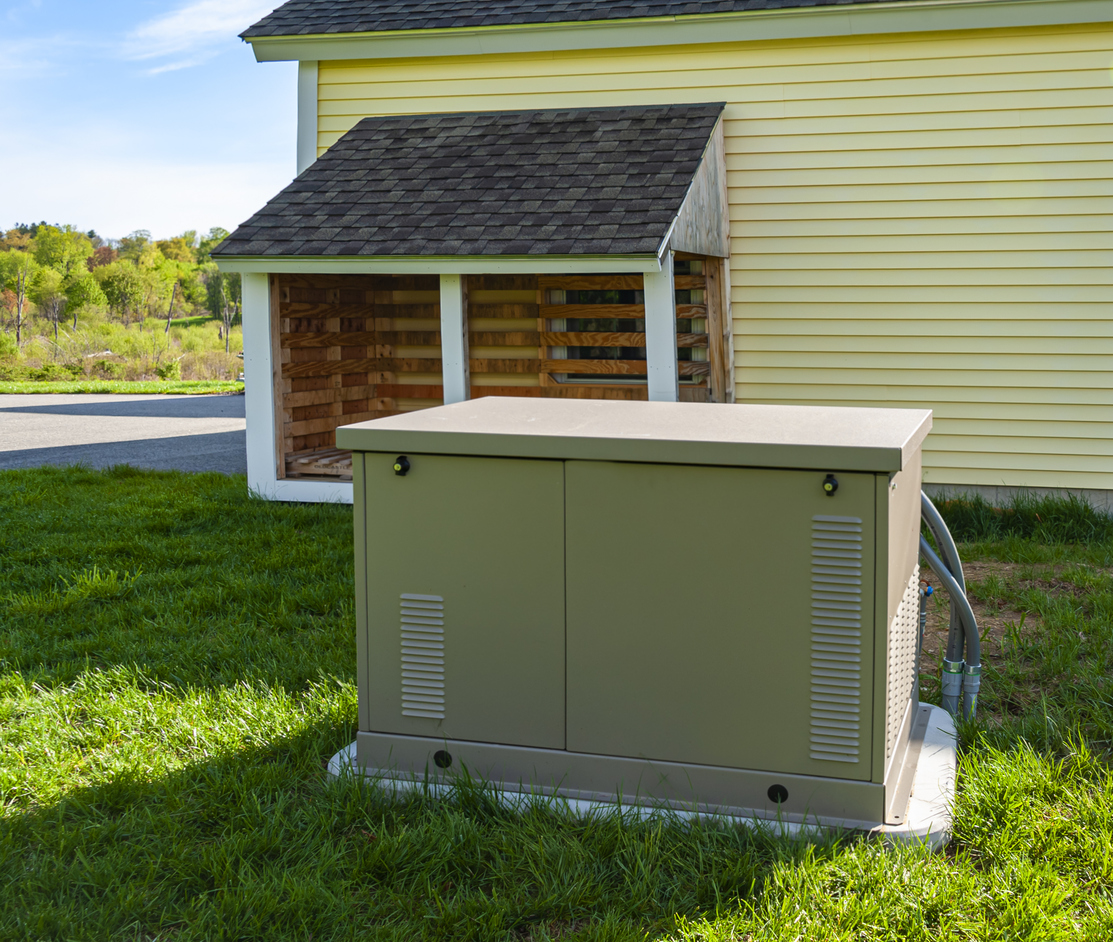
A transfer switch disconnects your home from the utility grid before connecting to generator power. It is the only safe and legal way to run a generator into your home’s electrical system. A licensed electrician installs it at your panel once, and it works every time. Castle Electric handles transfer switch installation as part of our broader electrical services throughout the Valley.
Pro Tip: Automatic transfer switches detect an outage and switch to generator power without you lifting a finger. If you lose power regularly during monsoon season, the upgrade pays for itself in convenience alone.
What to Check After Every Arizona Power Outage
Run through this list before assuming everything is fine:
- Check all breakers for tripped positions before turning appliances back on
- Turn off major appliances before resetting power to avoid cold load pickup
- Restore devices one at a time rather than all at once
- Check outlets for warmth, discoloration, or any burning smell
- Note any devices behaving abnormally in the days following the outage
- Schedule a professional inspection if you have experienced multiple outage cycles, a severe storm event, or have a panel older than 20 years
The Outage Is Over. Now What?
The power outage was an inconvenience. The restoration surge, the tripped breakers, and the unprotected electronics are the actual story.
The Castle Electric team has seen year after year what Arizona’s monsoon season and summer grid stress do to residential electrical systems, and the homes that come through it without damage are the ones that were prepared before the storm. Surge protection, a maintained panel, and a proper transfer switch are not reactive expenses. They are proactive ones.
Talk to a Licensed Scottsdale Electrician Before the Next Outage
If your panel hasn’t been inspected recently, your home has no surge protection, or you’re running a generator without a transfer switch, the next monsoon storm is an avoidable problem waiting to happen. Castle Electric and Lighting serves homeowners across Scottsdale, Phoenix, Chandler, Gilbert, Glendale, Mesa, Paradise Valley, and Fountain Hills. We will assess your system, install the right protection, and make sure you are ready for whatever Arizona’s summer throws at your electrical panel.
Call or text us at (480) 570-8014 or request a free quote online — before the lights go out.
Related Posts