
Arizona evenings are genuinely spectacular, and for most of the year, the backyard doesn't become…
Why Does Your AC Keep Tripping the Breaker Every Summer?
Arizona doesn’t exactly do subtle when it comes to heat. When summer arrives in the Valley, it shows up at 115 degrees, and suddenly, it’s a real challenge for your electrical system to keep up. If your AC keeps tripping the breaker or your lights flicker every time the compressor kicks on, your electrical panel is sending you a message. An electrical panel upgrade in Arizona isn’t a someday project. For a lot of homes, it’s an overdue one.
Most homeowners never think about their panel until something fails, usually on the hottest day of the year, with a house full of people and zero tolerance for downtime. Your AC unit is the single biggest electrical draw in your home, and if your panel wasn’t sized to handle it, summer will find that out for you. Here’s what you need to know before the heat arrives.
Your Panel’s Summer Report Card
- An AC unit running in Arizona heat draws more sustained amperage than almost any other appliance in your home, and your panel needs to be built for it.
- A breaker that keeps tripping under AC load isn’t malfunctioning; it’s warning you that your system is maxed out.
- Most Arizona homes should be on a 200-amp panel; if yours is still running 100 amps, summer is coming for you.
- A dedicated circuit for your AC unit isn’t optional; it’s how the equipment is designed to operate.
- A pre-summer electrical inspection is the smartest move you can make before June hits.
Why Arizona Summers Are a Different Animal for Your Electrical System
Most electrical systems in the U.S. were designed for moderate climates. Arizona is not a moderate climate. According to the U.S. Energy Information Administration, Arizona consistently ranks among the highest states in the country for residential electricity consumption, and that’s driven almost entirely by cooling loads that run for months on end.
What that means for you is that your AC unit cycles more frequently, runs longer, and draws significantly more amperage than it would in a milder climate. And it’s not running alone. It’s competing on the same electrical system with your refrigerator, water heater, pool pump, washer, dryer, and every device charging in every room of the house. That sustained, compounded load is exactly what exposes the weaknesses in an aging or undersized panel.
Warning Signs Your Electrical Panel Can’t Handle the Summer Load
Your panel won’t schedule a meeting to tell you it’s struggling. It communicates through symptoms, and if you know what to look for, you can get ahead of the problem before it becomes a crisis.
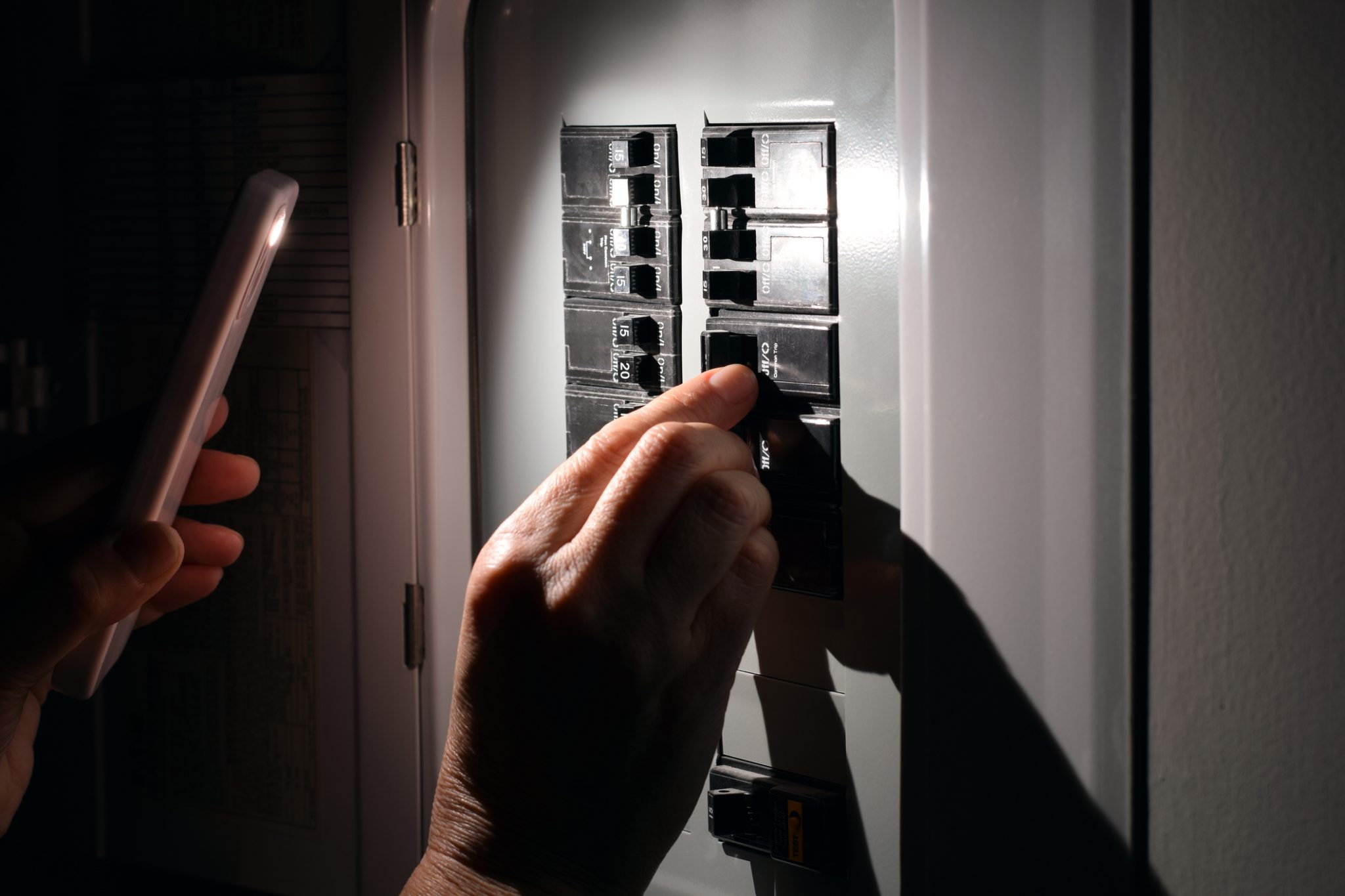
Your Breaker Trips When the AC Kicks On
When your AC starts up, it pulls a surge of amperage called inrush current, which is significantly higher than its normal running load. If your circuit is already near capacity, that startup surge is enough to trip the breaker. A breaker that trips once is doing its job. A breaker that trips repeatedly is telling you the circuit is undersized for the demand, and resetting it is not a fix.
Other Red Flags You Shouldn’t Ignore
Watch for any of the following; each one is a reason to call a licensed electrician before the temperature climbs:
- Lights dimming or flickering when the AC compressor starts
- Burning smell or visible scorch marks near the panel
- Breakers or the panel face that feels warm or hot to the touch
- Multiple breakers tripping simultaneously during peak afternoon heat
- A panel older than 20–25 years, especially Federal Pacific or Zinsco brands, which have well-documented safety issues
- Breakers that won’t stay reset
If any of these sound familiar, start with Castle Electric’s electrical panel upgrade services; a proper assessment will tell you exactly where you stand.
How to Know If Your Electrical Panel Can Handle Your AC Unit
The short answer: check the amperage rating on your panel, then have a licensed electrician compare it against your home’s total connected load. The longer answer involves a few numbers worth understanding.
Panel Amperage — What the Numbers Actually Mean
- 100-amp panels: The old standard. Rarely sufficient for a modern Arizona home with central AC, a pool, and today’s appliance load. If this is yours, an upgrade conversation is overdue.
- 150-amp panels: Better, but still marginal for larger homes with high cooling demands, EV chargers, or significant appliance loads.
- 200-amp panels: The current standard for most Arizona homes. Handles central AC, pool equipment, EV charging, and everyday load without breaking a sweat.
Your panel’s amperage rating is printed on the main breaker, which is the large breaker at the top of the panel. If it says 100, pick up the phone.
What a Licensed Electrician Looks For During a Panel Assessment
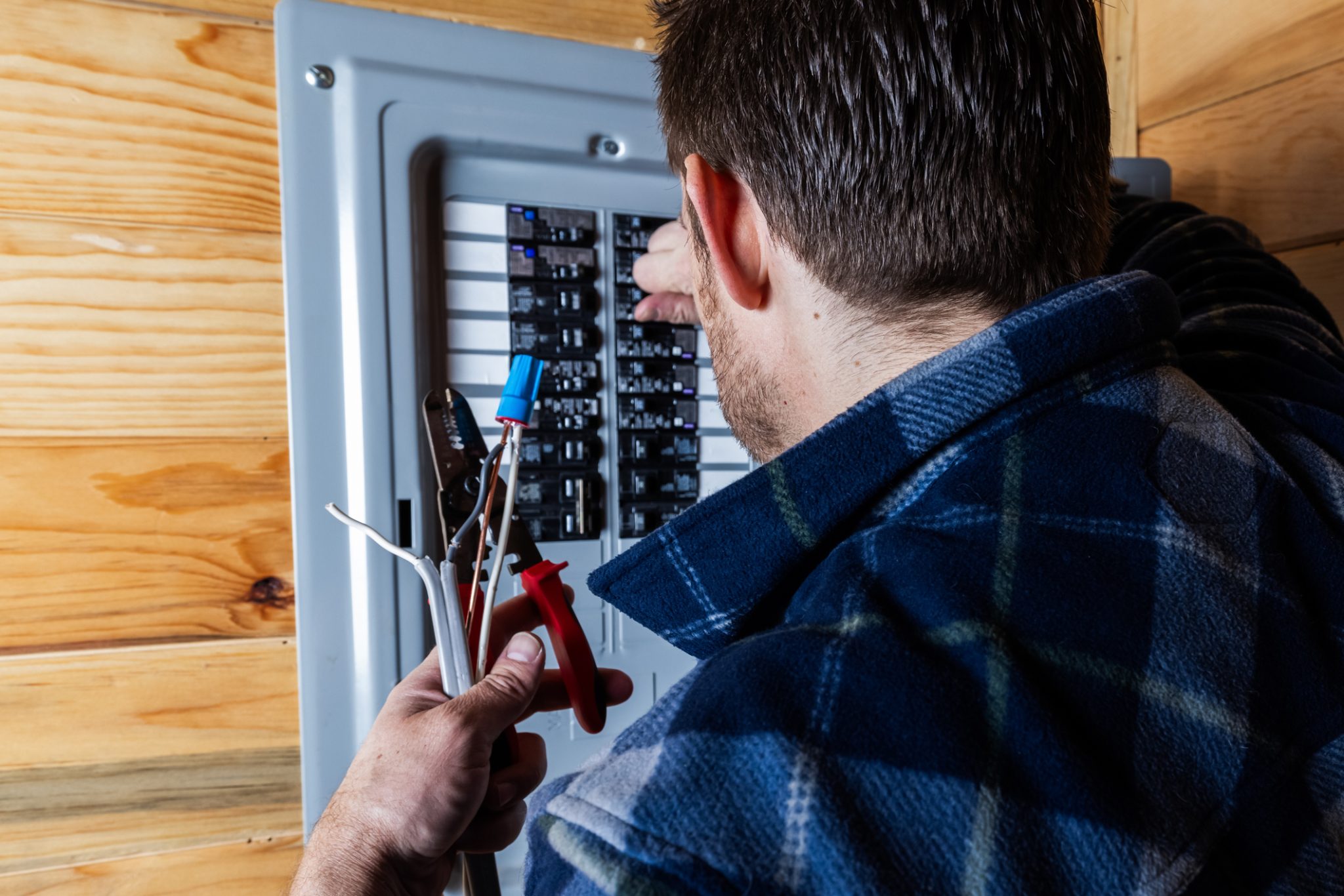
A thorough inspection goes well beyond reading the label. A licensed electrician will evaluate:
- Total connected load vs. panel capacity
- Age and condition of existing breakers
- Wiring type, gauge, and overall condition
- Available slots for circuit expansion
- Whether a dedicated circuit for your AC unit is present or missing entirely
Castle Electric’s electrical inspection services cover all of the above, and our team knows exactly what Arizona’s climate demands from a residential electrical system.
Pro Tip: If you’ve added a hot tub, EV charger, or new AC unit in the last few years without a panel assessment, schedule one now. Each of those additions changes your load calculation significantly.
What a Dedicated Circuit for Your AC Unit Actually Does
Central AC units require a dedicated 240-volt circuit, meaning that circuit exists solely to power the AC. No sharing. No competition. Just clean, properly sized power delivered to the one appliance that needs it most.
Without a dedicated circuit, your AC is competing for power with other devices on the same line. When demand spikes, which it will, every afternoon from May through September, something gives. Usually, it’s the breaker. Sometimes it’s the equipment. Running an AC unit on a shared circuit is one of the fastest ways to shorten the life of a compressor that costs thousands of dollars to replace.
Installation involves a new breaker sized correctly for the unit, a properly gauged wiring run from the panel to the AC disconnect, and a final inspection to confirm everything meets code. The U.S. Department of Energy recommends ensuring your electrical system is properly configured before installing or operating any central cooling equipment, and that starts with the dedicated circuit.
Don’t Wait Until Your Panel Fails at 115 Degrees
An undersized or aging electrical panel has a tendency to fail at the worst possible moment, in the worst possible heat, at the worst possible time. The combination of a properly sized panel, dedicated AC circuit, and pre-summer inspection is what separates a home that handles Arizona summers from one that gets handled by them.
These are proactive investments, not reactive repairs, and the cost of doing it right now is a fraction of what an emergency panel failure or damaged AC compressor will run you in July. The Castle Electric team has been keeping Valley homes powered through Arizona summers, and we know exactly what this climate demands from a residential electrical system.
Get Your Panel Inspection Before the Summer Rush
If your panel hasn’t been assessed recently, or ever, now is the time. Castle Electric and Lighting serves homeowners across Scottsdale, Phoenix, Chandler, Gilbert, Glendale, Mesa, Paradise Valley, Fountain Hills, and the surrounding Valley communities. Our licensed electricians will tell you exactly where your system stands and what it needs before summer puts it to the test.
Call or text us at (480) 570-8014 or request your free quote online: before the heat makes the decision for you.
Related Posts